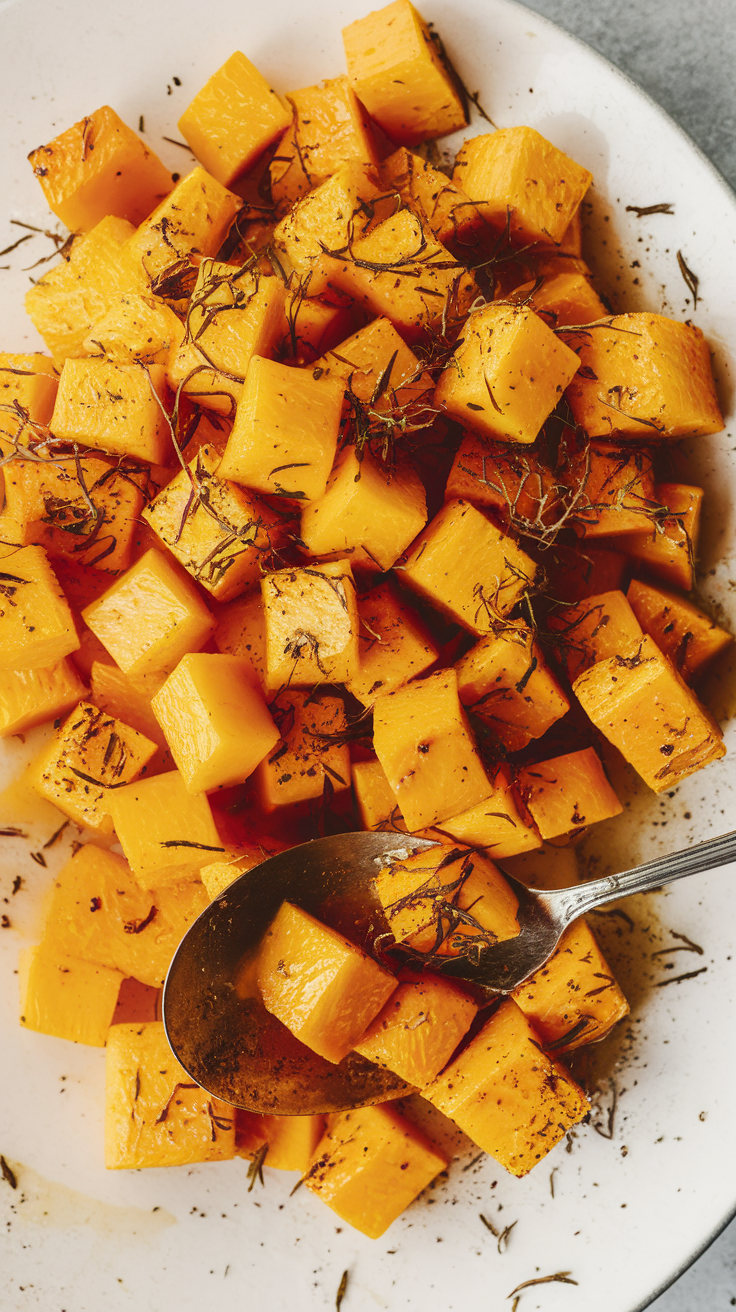
Ah, the humble butternut squash – a true gem of the autumn harvest. It’s like nature’s way of wrapping you in a cozy blanket, filling your kitchen with warmth and a hint of sweet nutty aroma that dances in the air. Remember that time when I tried growing one in my tiny urban garden? It didn’t quite succeed, but oh, the joy of roasting a store-bought beauty and watching it transform into golden perfection – pure magic!
Steps
- Begin by peeling the butternut squash using a sturdy vegetable peeler. Peel from the stem downward in long strips, and use short strokes to remove any remaining skin at the base.
- Slice off the stem and cut the squash in half lengthwise. Position the halves with the cut side up and scoop out the seeds with a spoon. If cutting is challenging, soften the squash slightly in the microwave or oven.
- Discard the seeds and dice the squash into 1-inch cubes. Aim for uniform sizes to ensure even cooking, even if the pieces around the base are irregularly shaped.
- Preheat your oven to 400°F and line a baking sheet with parchment paper. Spread the squash cubes evenly on the sheet, drizzle with olive oil, and season with salt and pepper.
- Roast the squash in the oven for 30-35 minutes. The squash is ready when it is tender and golden brown. Enjoy as a side dish or incorporate it into other recipes.

Ingredients
- 1 butternut squash, peeled, seeds removed, and cut into 1-inch cubes
- Extra-virgin olive oil, for drizzling
- Sea salt, to taste
- Freshly ground black pepper, to taste
- Chopped fresh parsley, optional, for garnish
FAQ
- How do I peel a butternut squash effectively?
- To peel a butternut squash, use a sharp vegetable peeler and start from the stem, working downwards in long strips. Use short strokes to remove any remaining skin at the base of the squash.
- What should I do if my butternut squash is too hard to cut?
- If the squash is too hard to cut, you can soften it by microwaving or warming it in the oven for a few minutes.
- How can I ensure my butternut squash cooks evenly?
- Dice the squash into roughly 1-inch cubes and try to keep them similar in size. Spread them in a single layer on a baking sheet with space between each piece to allow even cooking.
- What are some creative ways to use roasted butternut squash?
- Roasted butternut squash can enhance various dishes. Consider adding it to pasta, blending it into hummus or soup, stuffing it into enchiladas, or tossing it into salads and grain bowls.
- Can I add herbs to the roasted butternut squash?
- Yes, sprinkling fresh rosemary or thyme over the squash before roasting can add extra flavor.
Tips
- To make peeling the butternut squash easier, use a high-quality vegetable peeler and work from the top down, removing long strips of skin. If any skin remains near the base, use short strokes to clean it up.
- If cutting the squash is difficult, try microwaving or warming it in the oven for a few minutes to slightly soften it, making it safer to handle.
- When arranging the squash cubes on the baking sheet, ensure they are in a single layer with space between each piece. This will help them crisp and brown evenly in the oven.
- For added flavor, consider sprinkling fresh rosemary or thyme over the squash before roasting. This can enhance the dish’s taste profile and complement the sweet, caramelized squash.
Equipment
- Vegetable Peeler – A sturdy peeler for removing the squash’s skin.
- Chef’s Knife – A sharp knife suitable for cutting through the tough squash.
- Cutting Board – A durable cutting board to safely chop the squash.
- Baking Sheet – A large baking sheet for roasting the squash.
- Parchment Paper – For lining the baking sheet to prevent sticking.