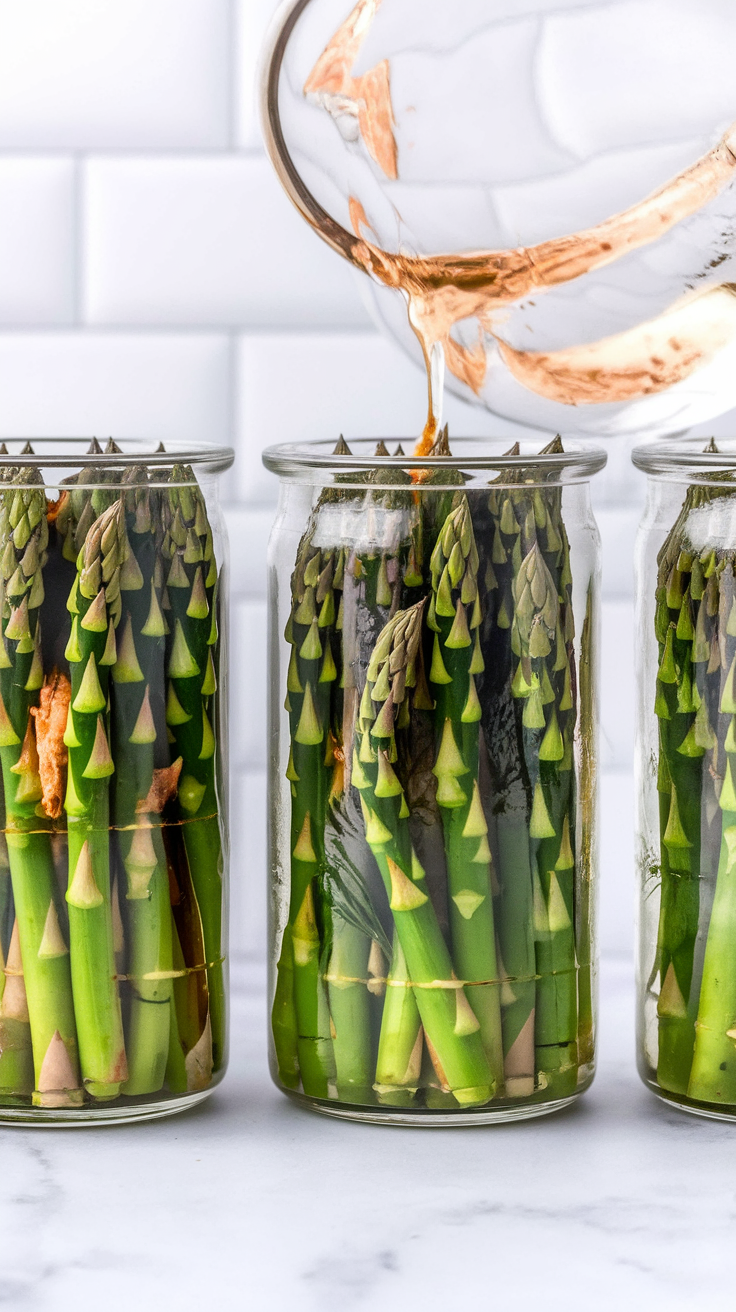
Oh, pickled asparagus, how you transform my mundane pantry into a wonderland of tangy delight! Once, on a lazy Sunday afternoon, I stumbled upon this recipe and decided to give it a whirl—what a revelation! The crunch and zing of these spears are like a summer picnic in a jar, perfect for sprucing up a charcuterie board or just snacking straight from the jar when nobody’s looking.
Steps
- Trim and discard the tough, woody ends of the asparagus, then cut the spears to fit vertically in your jars. Thinly slice the shallot and peel and halve the garlic.
- Arrange the asparagus, sliced shallot, garlic halves, and fresh dill in your jars. Make sure to leave enough room for the brine to cover the asparagus completely.
- In a medium saucepan, heat the vinegar, water, sugar, and salt over medium heat. Stir until the sugar and salt have dissolved completely.
- Pour the hot brine over the asparagus in the jars, ensuring the spears are fully submerged. Add whole peppercorns to each jar for added flavor.
- Allow the jars to cool to room temperature, then cover them and refrigerate. The pickled asparagus will be ready to enjoy the following day and can be stored in the fridge for up to two weeks.

Ingredients
- Fresh asparagus (thin to medium-sized spears)
- 1 cup distilled white vinegar (or white wine vinegar)
- 1 cup water
- 1 tablespoon cane sugar
- 1 tablespoon salt
- 1 shallot, thinly sliced
- 2 cloves garlic, peeled and halved
- Fresh dill
- Whole peppercorns (assorted colors or all black)
FAQ
- How long will pickled asparagus last in the refrigerator?
- Pickled asparagus can be stored in the fridge for up to two weeks. However, they are often consumed much faster because of their delicious taste.
- What type of asparagus is best for pickling?
- It’s best to use thin to medium-sized asparagus spears for pickling. Thicker spears might not become as tender or flavorful during the pickling process.
- Can I use a different type of vinegar for pickling asparagus?
- Yes, while distilled white vinegar is typically used, white wine vinegar can also be a good option for the brine.
- Do I need to can the pickled asparagus for preservation?
- No, this recipe uses quick pickling, which means the asparagus is soaked in an acidic brine and stored in the refrigerator, not canned.
- What are some serving suggestions for pickled asparagus?
- Pickled asparagus can be enjoyed as a snack, added to a cheese platter, topped on avocado toast, stuffed in sandwiches, or tossed into salads and grain bowls.
Tips
- Choose the Right Asparagus: Opt for thin to medium-sized asparagus spears, as they will pickle more tenderly and absorb flavors better than thicker spears.
- Ensure Full Submersion: When pouring the hot brine over the asparagus in the jars, make sure the spears are completely covered. This ensures even pickling and optimal flavor absorption.
- Allow Time for Flavor Development: Although you can eat the pickled asparagus the day after making it, letting it sit for a day in the fridge will enhance the flavors and give you a more delicious result.
- Experiment with Serving Options: Beyond snacking, try adding pickled asparagus to cheese boards, salads, or sandwiches for an added tangy crunch.
Equipment
- Canning Jars – Specifically, 11.5-ounce jars or quart-sized Mason jars.
- Medium Saucepan – For heating the pickling liquid.
- Jar Funnel – To help pour the brine into the jars without spilling.
- Jar Lifter – Useful for handling hot jars safely.
- Lid and Band Set – If not included with the jars, for sealing the jars properly.